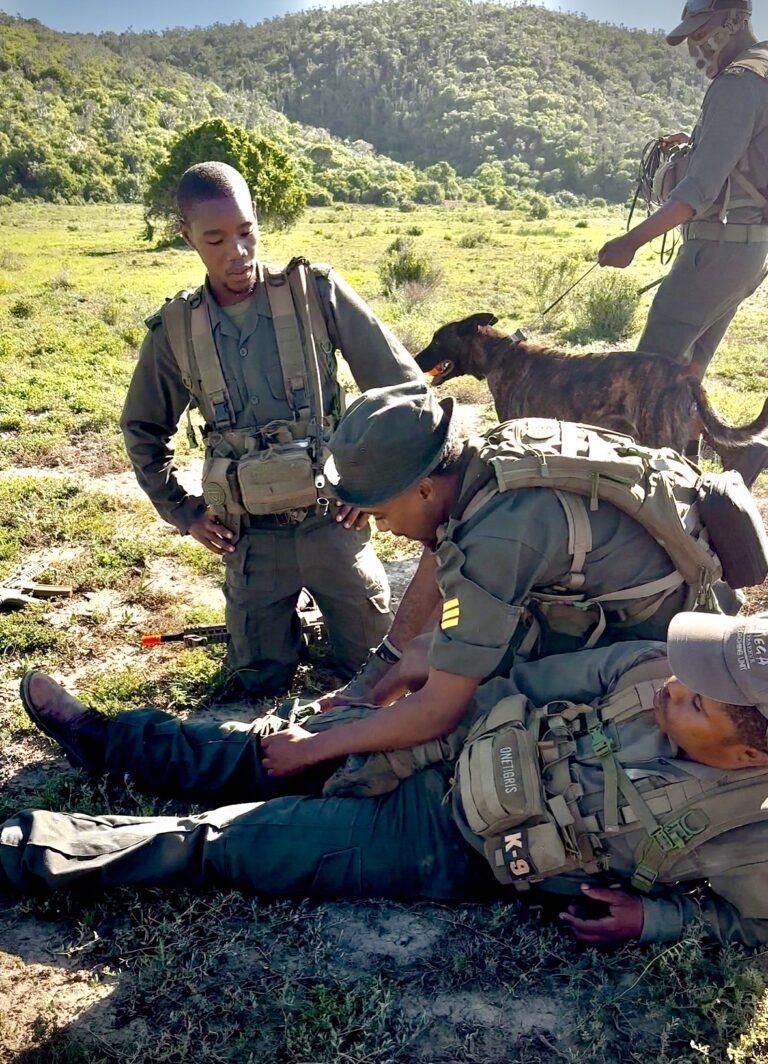
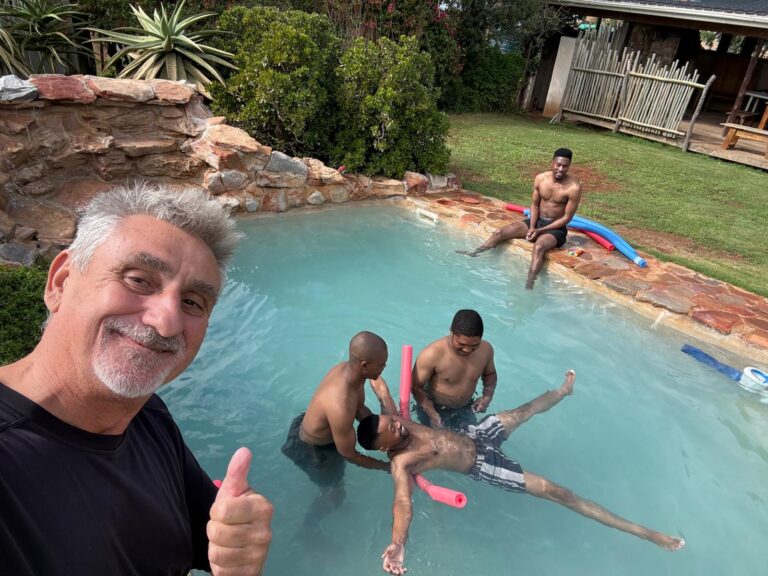
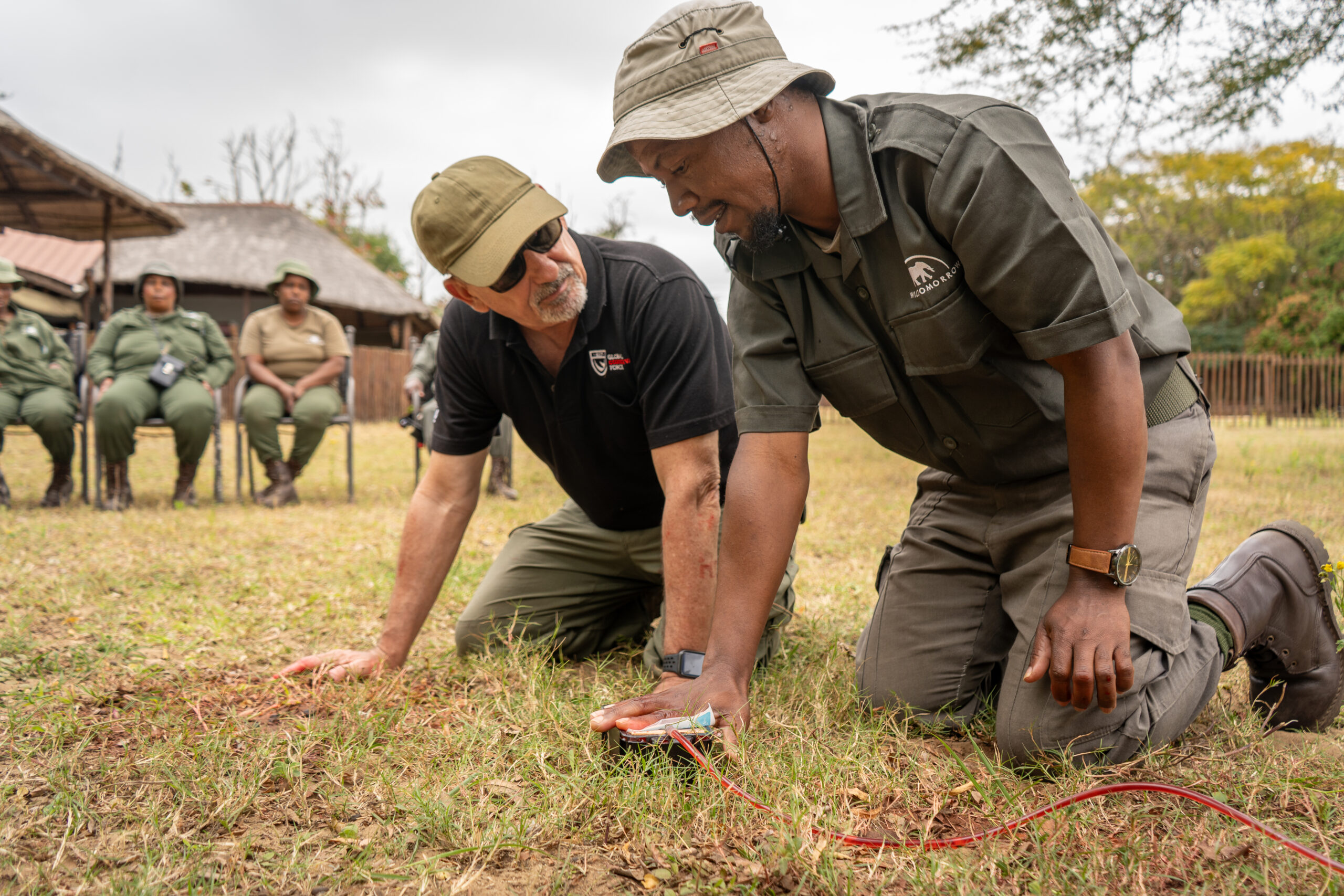
Global Conservation Force (GCF) recently ran and fully sponsored a comprehensive First Responder / First Aid and Tactical Emergency Casualty Care (TECC) training, alongside swim lessons and water rescue instruction, for our dedicated anti-poaching partners at the Kariega Foundation, supporting operations within Kariega Game Reserve in South Africa. This multi-discipline training program was designed to strengthen the lifesaving capabilities of rangers operating in remote and high-risk environments where immediate medical care is often the difference between life and death.
Building Lifesaving Capacity on the Front Lines
The course was led by GCF Lead Medic Instructor Chris Laursen, who delivered practical, scenario-based instruction tailored specifically to the realities faced by anti-poaching units in the field. Rangers routinely patrol vast wilderness areas, often hours away from advanced medical care, making strong first responder skills critical to both team safety and operational success.
For many participants, this training served as a critical refresher, reinforcing previously learned medical skills and advancing their confidence in responding to trauma-related emergencies. For others, this marked their first formal introduction to First Responder and TECC protocols, giving them foundational knowledge and hands-on experience that will directly impact their safety and survivability in the field. By blending refresher-level instruction with first-time certification opportunities, the program strengthened the unit as a whole, ensuring that every team member, regardless of prior experience, gained meaningful and practical skills.
In addition to medical training, GCF incorporated swim competency development and water rescue training into the program. Many anti-poaching environments include rivers, dams, and other water hazards that can pose significant risk during patrols or emergency response situations.
These water safety components focused on:
Building swim confidence and endurance
Teaching safe water entry and rescue techniques
Practicing casualty recovery in water environments
Strengthening team-based rescue response skills
For several rangers, this marked an important milestone, developing water confidence and lifesaving ability that could one day protect both teammates and civilians in emergency situations.
Sponsored Training That Removes Barriers
This training was fully sponsored and delivered by Global Conservation Force, removing financial barriers that often prevent frontline teams from accessing advanced medical and safety instruction.
By covering all associated costs, including instruction, and materials, GCF ensures that critical lifesaving training reaches those who need it most: the men and women protecting wildlife on the front lines.
These sponsored programs are made possible through the continued support of donors and partners who believe in investing directly into ranger safety, preparedness, and resilience.
Strengthening Ranger Safety Protects Wildlife
Well-trained rangers are more confident, more capable, and better prepared to handle emergencies in remote environments. Whether responding to traumatic injuries, water-related incidents, or field accidents, these lifesaving skills directly reduce risk and improve survival outcomes. Most importantly, strengthening ranger safety allows anti-poaching teams to remain focused on their mission, protecting endangered wildlife and defending critical ecosystems.
Every ranger trained represents another layer of protection for wildlife and another step toward safer, more effective conservation operations.
Prepared Teams Save Lives
Global Conservation Force remains committed to delivering and sponsoring high-impact, field-relevant training programs for our conservation partners worldwide. Programs like this one at Kariega demonstrate the importance of investing not only in wildlife protection tools, but in the people who stand on the front lines every day.
Prepared teams save lives. Strong partnerships protect wildlife.