


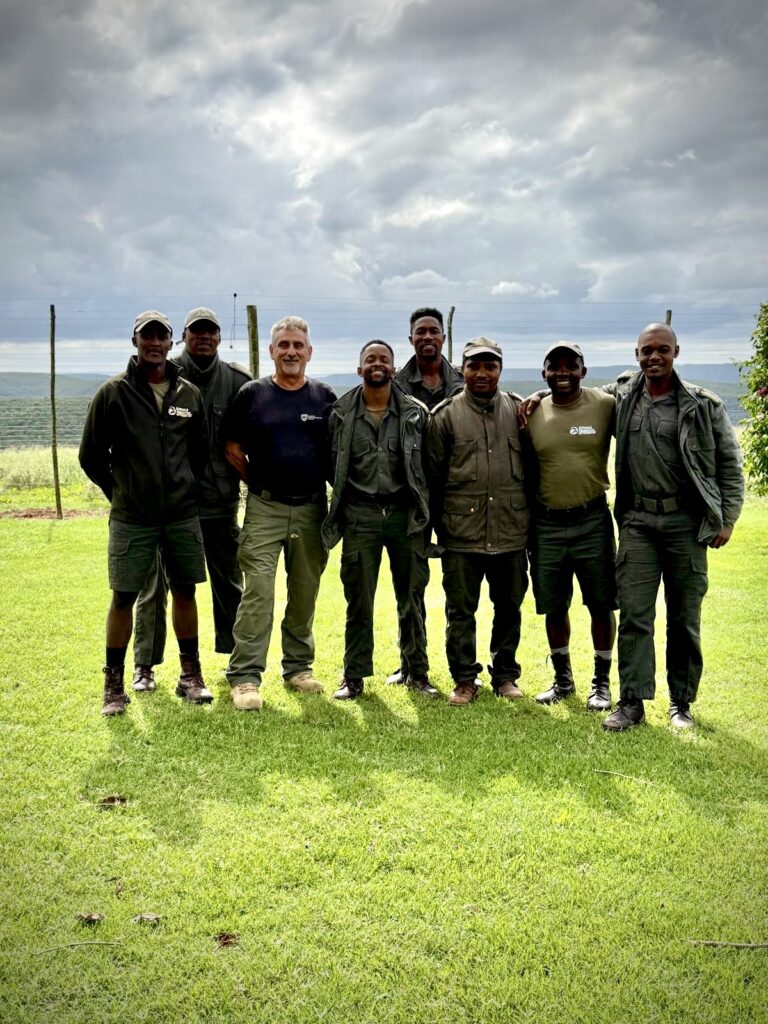
After more than a decade of service, field deployments, and ranger training across Southern Africa, Global Conservation Force is formally announcing the conclusion of Chris Laursen’s service with GCF as our Lead Field Medic and Instructor. While this marks the end of Chris’s role with the organization, it also provides an opportunity to recognize more than 10 years of volunteer service and the impact that work has had on rangers operating on the front lines of wildlife protection.
A Chance Meeting in the Greater Kruger
Chris’s journey with GCF began more than a decade ago through a chance meeting in South Africa. GCF Founder and CEO Mike Veale was working in the Greater Kruger region as part of a specialized rhino protection unit. While Mike was back at ranger base filing reports after field operations, Chris happened to stop by and asked a simple question: Could medical training for the rangers be of use?
The answer was an immediate yes.
Rangers protecting rhinos and elephants in poaching-crisis hotspots work in remote environments, often hours from advanced medical care. In addition to the risks associated with poaching operations, they routinely work around dangerous game, difficult terrain, vehicles, firearms, extreme weather, and the everyday hazards of demanding field patrols. That conversation sparked what would become more than a decade of collaboration.
Chris went on to serve as GCF’s Lead Field Medic and Instructor, helping develop and deliver field-relevant medical training specifically for anti-poaching rangers and conservation teams.
Training Rangers on the Front Lines
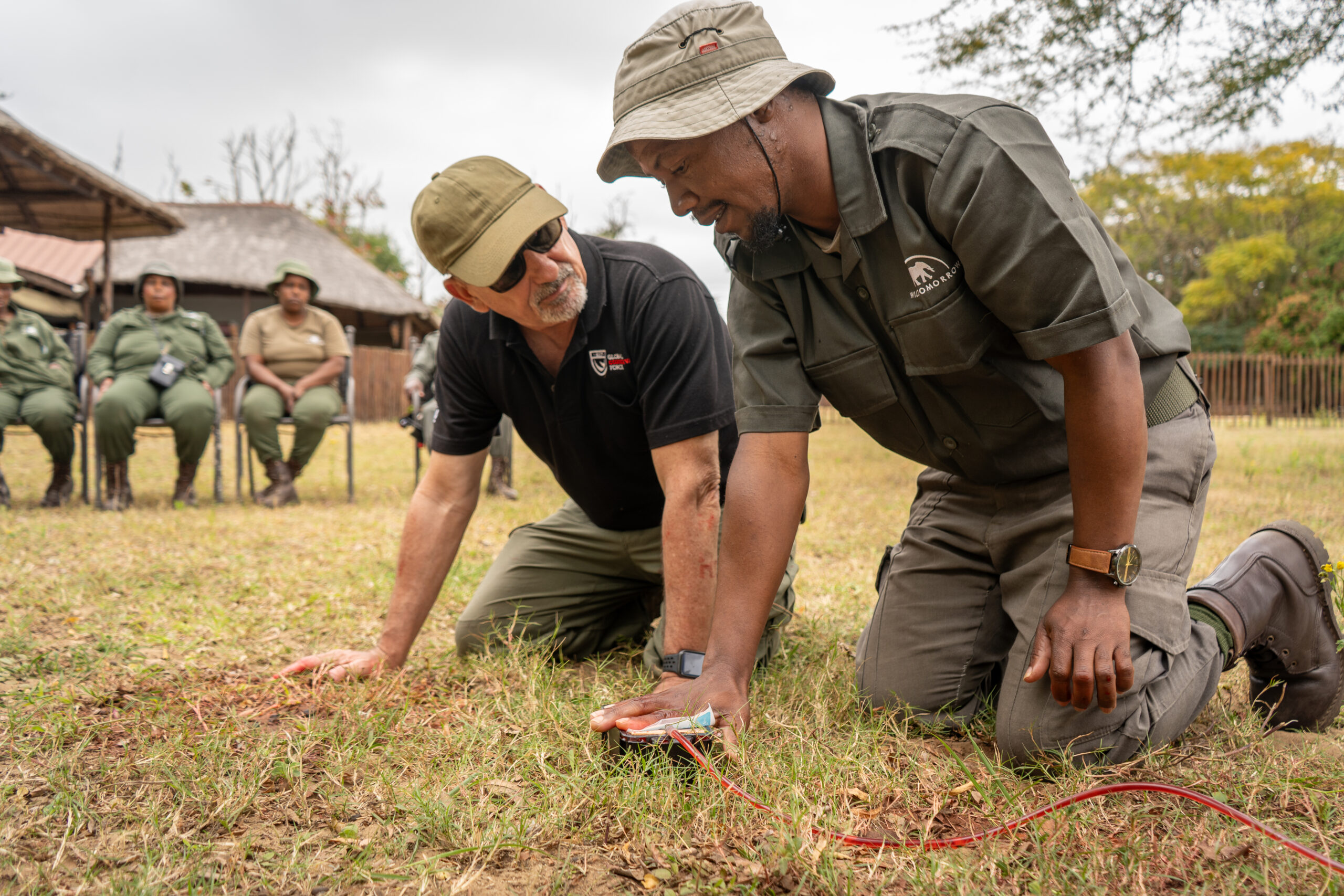
Over the years, Chris deployed with GCF to work alongside rangers and conservation teams across South Africa and Zimbabwe, delivering first responder, field medical, Tactical Emergency Casualty Care (TECC), and scenario-based training.
The goal was never simply to provide another certificate. Training focused on situations rangers could realistically encounter: severe bleeding, traumatic injuries, fractures, dehydration, dangerous-game incidents, evacuation challenges, and emergencies occurring far from conventional medical services.
In 2018, Chris led a GCF medical training deployment serving rangers from eight reserves in the heart of South Africa’s rhino-poaching crisis. During this period, GCF medical deployments were capable of reaching approximately 100–150 rangers per deployment, combining instruction with sponsored field medical equipment.
More recently, Chris led a GCF-sponsored TECC training tour across the Eastern Cape, training 63 rangers from Kariega, Lalibela, Bucklands, Shamwari, and Amakhala, with participating anti-poaching units also receiving sponsored medical equipment. Throughout this work, Chris donated his professional time and expertise to GCF and occasionally contributed medical or training equipment himself.
GCF, through the support of our donors and sponsors, covered the significant costs required to make these deployments possible, including Chris’s flights, accommodations, vehicles and ground transportation, while also funding the medical equipment and unit gear sponsorships provided directly to ranger teams. It was a model built around donated expertise, donor support, organizational logistics, and strong conservation partnerships, and it allowed training and equipment to reach ranger teams where they were needed most.
Five Years at Kariega and the Black Instructor Beret
One of the important chapters of Chris’s service came through GCF’s five-year partnership-building effort with the Kariega Foundation and Kariega Game Reserve.
GCF worked alongside our partners at Kariega to strengthen ranger capacity through training, equipment sponsorships, operational development, and continued investment in the people responsible for protecting the reserve and its wildlife. Chris was an important part of that effort.
After serving as a medic instructor during the Kariega community selection bootcamp, Chris reached an important milestone within GCF: earning GCF’s black instructor beret. The black instructor beret is not simply issued with an instructor title. It is earned through time, experience, field work, commitment, and dedication to the cause.
For Chris, earning it represented years of deployments, instruction, and service that began with a chance meeting in the Greater Kruger and developed into more than a decade alongside GCF.
When Training Becomes Action
The most important measure of this work has never been the number of courses taught or certificates issued. It has been what happened afterward.
Over the years, rangers have reported back to GCF about situations where their medical training and GCF-sponsored equipment were used during actual emergencies, from routine field injuries to serious trauma and dangerous-game incidents. We know this training has helped save life and limb.
Protecting rhinos, elephants, and other threatened wildlife also means protecting the people standing between those animals and the threats they face. Investing in the safety, capability, and survival of rangers has therefore always been an essential part of GCF’s mission. Chris played an important role in building that capability. His work also extended beyond individual courses. Chris trained rangers, students, conservation professionals, and developing instructors, helping establish medical preparedness as a lasting component of GCF’s wildlife protection and field training programs.
Those skills remain in the field today, with the rangers who know how to respond when a teammate is injured, in the medical kits carried on patrol, and with the instructors who will continue passing that knowledge to the next generation. That is a meaningful legacy.
Thank You, Chris
More than 10 years is a significant chapter in the life of any organization. There were countless flights, long drives between reserves, days in classrooms and nights in the bush, scenarios run in the dirt, medical kits handed over, and years spent working alongside people whose jobs require them to operate in circumstances most will never experience.
We are grateful to Chris for the professional time and expertise he volunteered, the equipment he personally contributed along the way, and the commitment he gave to the rangers and conservation teams GCF serves. We are equally grateful to the donors, sponsors, partners, and supporters who funded the deployments, equipment, logistics, and opportunities that allowed this work to happen for more than a decade.
A New Chapter for GCF
GCF’s field medical and TECC programs will continue through our instructor team, with an increasing focus on developing multidisciplinary instructors capable of bringing multiple teaching and field-relevant skills to deployments around the world. The philosophy behind the program remains the same as it was when Mike and Chris first crossed paths at a ranger base more than 10 years ago:
If we expect rangers to stand on the front lines protecting wildlife, we have a responsibility to help give them the training, equipment, and skills necessary to come home safely.
To Chris, thank you for more than a decade of service, for the rangers trained, the knowledge shared, and the chapter of Global Conservation Force that you helped build.
We wish you the best in your next chapter.

- Copyright 2024. All Rights Reserved. Powered by Wild Media.